Television & Cinema
A quiet night in?
The introduction of television affected cinemas greatly. After the end of World War II the number of cinema tickets sold every year reached 1,635 million. This steadily declined to just 54 million tickets sold in 1984. Cinema attendance was then affected by the development of the multiplex, which has encouraged people to visit the cinema more frequently. Attendances rose again, levelling off at around 160 to 170 million from 2004 onwards.
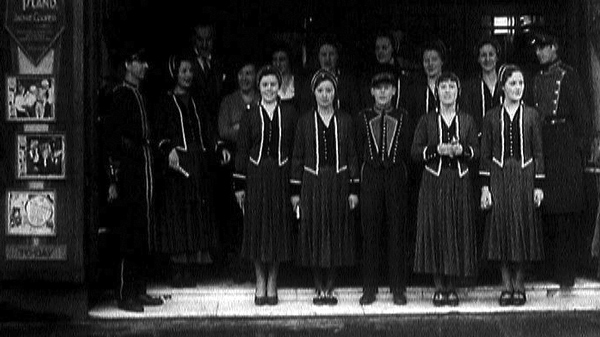
Smaller cinemas have struggled to stay in business in recent years. Many city centre cinemas have closed, and those that stay open are large multiplex cinemas on the outskirts of towns.
Cinema discussion
Seek out some cinema attendance statistics. Chart the attendance figures each year. Try and work out what has affected increases and decreases in the figures.
Some issues to consider...
- Home cinema technology has vastly improved and come down in price.
- IMAX and 3D films are becoming more common
- Sky, cable and freeview offer better choice than traditional terrestrial television (hundreds of channels)
- Cheap and fast Internet access allows people to download films
- Cheap and fast Internet access offers an alternative leisure activity. People play games and chat online instead of meeting at the cinema)
- Multiplex cinemas offer more choice but depend on the majority of cinemagoers having cars.
- Future technology such as 3D projection or 3D televisions
Cinema technology
Most cinemas now have digital projectors. Previously film production companies and distributors had to spend thousands of pounds making a 'print' to project in each cinema screen. The print, large reels of plastic film, was very heavy so it costs a lot to ship them to cinemas. These have to be spliced together (the ends of the film on different reels get stuck together) at the cinema to show the whole film. A two hour film is actually made up of six 20 minute reels, spliced together on one big reel.
Digital projectors now mean that it isn't just the big movie production companies that can afford to show their films at the cinema. Distribution costs are lower so small production companies or even individuals can show their films at cinemas, provided, of course, that the cinema likes it! This means there are a wider variety of films that cinemas can show. It does cost cinemas a lot of money to install digital projectors though.
The digital projectors also improve access for hearing impaired cinemagoers. It costs very little in comparison to make subtitles that can then be superimposed onto the film or displayed separately.
Moving images when you want them
Television has changed so much. We used to only have a couple of channels that were only on for a few hours a day. Now we have hundreds of channels available via satellite or online, and if that wasn't enough we can record shows on Freeview, Sky etc and catch up with films using on demand facilities on iPlayer.
TV producers, like the BBC and Channel 4, realised they couldn't stop the illegal downloading of their shows. They developed their own systems for showing TV programmes within a period of time after the broadcast (usually 30 days). They can restrict access to just viewers in the UK. Viewers can also download a copy using special software, but it will only be watchable for a certain period of time.
There has been a similar shift in viewing habits as when video recorders first became popular. People can time-shift their viewing more easily than ever. We don't all need to gather round the telly at 7pm for Doctor Who. We can go out for the evening and watch it over breakfast instead. We can move the time we would normally watch a show to a different time. We can pause the action while we make a cup of tea.

Now we decide when to watch
We are in control - not an executive of a TV station trying to get best ratings and compete with other channels. Viewers get a good quality, official version of a programme. The TV station gets more viewers to contribute to their audience figures (which affects future funding or advertising).
Internet video
YouTube and similar sites allow anyone with a camera, computer and an internet connection to upload a video to the world wide web. Before this it was more difficult to upload a video and host it (save it) somewhere online, as well as telling everyone about it. Before the internet became accessible to most households it was virtually impossible to show your homemade videos to a global audience. We were all just viewers, sitting watching TV decided for us by an executive. Now we can all be producers, making and sharing our movies and choosing what we want to watch ourselves.