Children's Rights
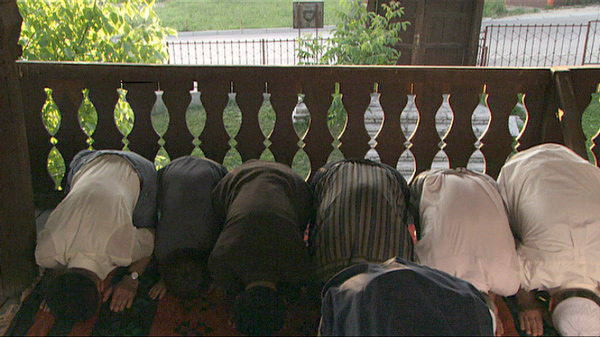
Use the film The Way We Played to think about rights and responsibilities in class. Pupils often have misconceptions about Muslims and the Islamic religion due to common stereotypes. Let pupils brainstorm examples of racial intolerance - from present day or the past. Where does racial and religious intolerance spring from? Historically ingrained, ignorance, economic conditions, cultural conventions ? What can be done to prevent it? Education, laws, human rights bills ?
Show Racism the Red Card provides views from many of our top footballers which pupils may find easy to relate to.
Activity 1 - children's rights
Stevo and Ramiz celebrate with their classmates when the school is declared closed. This initial euphoria would not have been maintained for long.
Imagine all the schools in your country were closing, in groups talk about how you would feel, and what the advantages and disadvantages would be.
Despite pledges from world leaders 75 million children worldwide do not have the right to education. Send My Friend has loads of lesson plans, case studies, film clips and stories on the importance of education, including contributions by Nelson Mandela and Michael Morpurgo.
Activity 2 - the little book of rights
Before you start
Download The Little Book of Rights and use this as inspiration for the next exercise
Then in small groups
- Make a list of conventions (or rules) for your school. (Allow plenty of time as this will generate lots of discussion!)
- Consider how we treat others, including how teachers treat pupils and pupils treat teachers. How property is treated, who has a say in decisions, what kinds of decisions pupils can influence and to what extent.
- Decide on the 5 most important conventions.
Join up the groups
- Join with another group and vote on the 5 conventions you consider to be most important.
- Discuss how pupils felt about the process?
- Was everybody in agreement with the final 5 ?
Look at your final five
- Why might it be difficult to get your conventions followed?
- Do you think all teachers would be willing to sign up to the conventions?
- What would happen to people who broke the conventions?
Extra Activity
Watch some of the case histories from Send My Friend. Hold a class debate between children missing out on education and world leaders who agreed that all children would attend school by 2015.
Advanced
With an older group it would be interesting to discuss why "Our government has ‘reservations‘ about Articles 10 and 37.”
Activity 3 - Beyond the fire
War has killed two million children in the past ten years alone. Four million children have become disabled and hundreds of thousands serve as child soldiers. Nearly half of all refugees worldwide are under 18, and across the globe, an estimated 25 million children have been uprooted from their homes as a result of war. Beyond the Fire introduces the real-life stories of 15 teenagers, now living in the USA, who have survived war in seven war zones. These stories tell of loss, hope, fear, strength and despair and most of all, resilience. Explore the histories of these teenagers - especially Beserta from Serbia and Jelena from Bosnia.
Next ask students to consider the type of life experience that the typical teenager might have compared to that of the refugee. While there will clearly be many differences, students may be surprised to learn that they also have some things in common with these teens - whether that is a shared interest in sports, or a shared experience of family hardships. Choose 3 of the refugees and list how their lives were affected under the following headings:
- Home life: How conditions in the refugee's home country have affected the family structure and relationships within the family.
- Education: How being a refugee has impacted schooling, regular attendance at school, types of educational opportunities.
- Economic: conditions: How the experience of living through war and being a refugee has impacted the family's financial situation, access to jobs, etc.
- Social life: How the refugee's experience has affected his/her friends, boyfriend or girlfriend or social life (e.g. rights of females in Afghanistan as controlled by the Taliban).
Choose one of the refugees and, assuming they are still in their homeland, write either a diary entry for a week or a letter to a British penpal trying to explain what daily life is like and their hopes and fears.
Other starting points
Watch Cry for Bobo for a wonderfully original and amusing lighter look at the treatment of 'minorities'.
Read the children's book by Deborah Ellis Parvana's Journey (a sequel to The Breadwinner), which follows Parvana's search for her family in Afghanistan.
Discuss Hermione’s quest to free the House Elves that continues through the Harry Potter book series (but which is mostly ignored in the films).
Read Joe Sacco's documentary comic book Safe Area Gorazde, which covers the period 1994-95, including the Srebrenica Massacre.