Censorship & Certification
Censorship has always been controversial, and introducing film censorship into the classroom is an excellent way to engage students with some pretty important issues...
- To what extent should someone else decide what I can see?
- Does society need to be "protected" from certain texts?
- Does what people see affect their behaviour?
Such debates sit well within Modern Studies, English and Media Studies lessons, but could also support Religious Education and History.
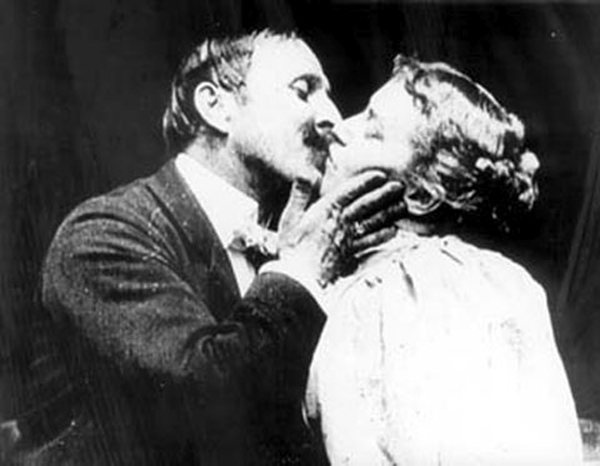
During its relatively brief history, film has generated a large amount of attention from censors. The UK has one of the most regulated (if not censored) film and TV industries in the world, yet changing technologies are making censorship and regulation more difficult. This section allows us to explore the background of film censorship, the current situation, and provides lots of practical classroom ideas, based around a media form which will motivate the great majority of students.
The bbfc have a good website for primary school children to study the work they do.
Film censorship timeline
- 1896 The May Irwin Kiss, features first ever screen kiss. Catholic Church calls for censorship
- 1911 British Board of Film Censors (BBFC) established
- 1920 London City Council make cinema licences conditional on only screening films certified by BBFC
- 1934 The Hays Code, developed by conservative lawyer Will Hays comes in to force in America. It is an extensive lists of topics to be avoided in Hollywood films, including "suggestive dancing"
- 1951 The BBFC institutes the "X" certificate, for the first time in Britain under 16s are legally barred from watching certain films
- 1965 The National Viewers and Listeners Association (Mediawatch since 2001) is founded by former school teacher Mary Whitehouse. It campaigns extensively against sex and violence, its period of greatest influence was the 1970s and 80s
- 1979 Monty Python's Life of Brian (Terry Jones) is released, with many religious groups accusing the film of being blasphemous. Pressure from Christian group Nationwide Festival of Light led to numerous councils banning the film, which was passed uncut by the BBFC
- 1984 The BBFC changes its name to the British Board of Film Classification (losing the word "censor")
- 1989 The release of Batman (Tim Burton) leads to the initiation of the "12" certificate by the BBFC, as the film was considered too violent for a pre-teen audience
- 2008 The BBFC is ordered against its will by the Video Appeals Committee to grant an "18" certificate to violent video game Manhunt 2
History
The first public cinema in Scotland (the recently restored Bo'ness Hippodrome) opened in 1912, just in time for its screenings to fall under the jurisdiction of the newly established British Board of Film Censors. This new body was independent of government and granted certificates to films, initially either "U" for "Universal" or "A" for "Adult".
Video nasties...?
The 1980s and 90s saw a great deal of tabloid attention given to violent films, so called 'Video Nasties', and their availability on video with films such as The Evil Dead,Driller Killer and Child's Play providing good case studies. The 1984 Video Recordings Act saw censorship of the home video market for the first time, with often more severe cuts than on cinema releases.
Totalitarian regimes such as Stalin's Russia tightly controlled artistic output of all kinds
Crash controversy
However, confusingly, local authorities had the right to disregard BBFC certificates if they wished, and permit licences, or ban films from being screened. This is still the case today, and led to the controversy over David Cronenberg's Crash in 1997, which was passed uncut by the British Board of Film Classification. The British Minister for National Heritage, Virginia Bottomley (who hadn't seen the film) called for "local authorities to make their own decision and use the powers they have locally to refuse the film a screen. All of us must be worried about material which, if seen repeatedly, can influence lives." Westminster Council did indeed ban screenings of the film, but neighbouring boroughs such as Camden allowed the film's release.
All of us must be worried about material which, if seen repeatedly, can influence lives